Table of Contents
Introduction
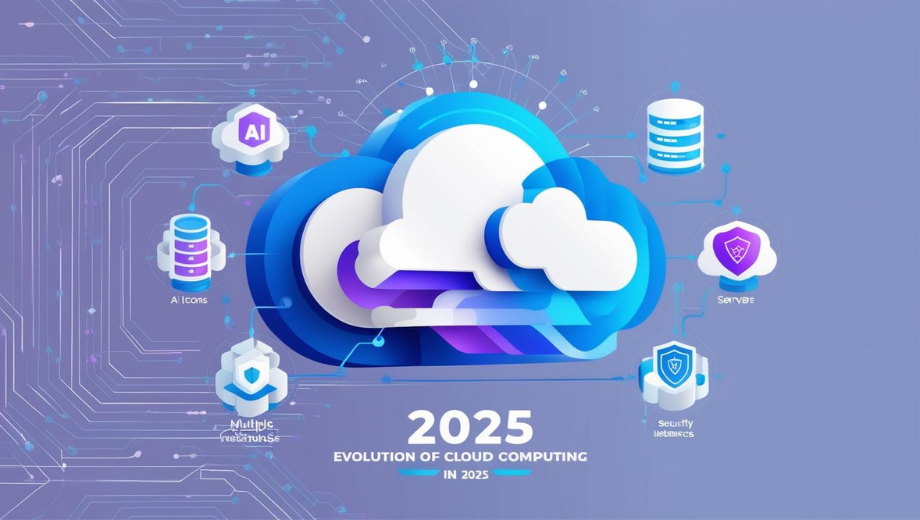
Cloud computing has been one of the most transformative technologies of the last decade, revolutionizing how businesses store, manage, and process data. From infrastructure as a service (IaaS) to platform as a service (PaaS) and software as a service (SaaS), cloud solutions have provided organizations with unmatched flexibility, scalability, and efficiency. As we approach 2025, the cloud computing landscape is evolving, driven by new trends, emerging technologies, and increasing demand for innovative services. In this blog, we’ll explore the key trends and technologies that will shape the future of cloud computing.
1. Hybrid and Multi-Cloud Architectures Take Center Stage
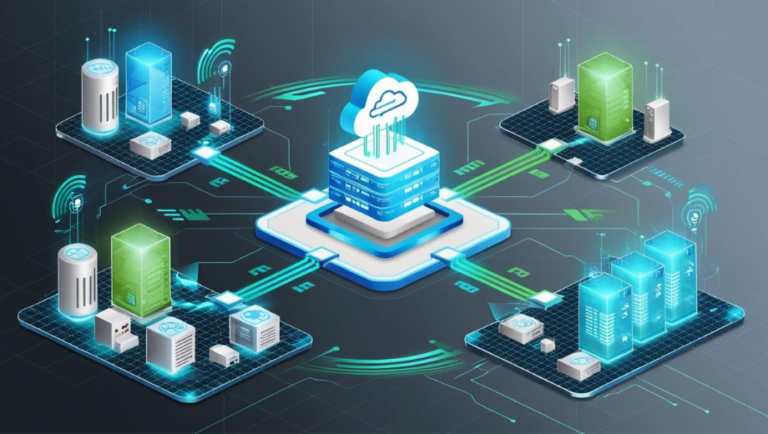
As businesses continue to embrace the cloud, many are opting for hybrid and multi-cloud strategies to ensure maximum flexibility, control, and risk management. A hybrid cloud model allows organizations to use a combination of private and public clouds, enabling them to store sensitive data in a private cloud while leveraging the scalability of public clouds for less critical workloads. On the other hand, multi-cloud refers to the use of multiple cloud providers, allowing organizations to avoid vendor lock-in and leverage the best services each provider offers.
Why Hybrid and Multi-Cloud Are Gaining Popularity:
- Avoid Vendor Lock-in: Companies can select the best cloud provider for each workload, ensuring optimal performance and cost-efficiency.
- Improved Risk Management: Spreading workloads across multiple clouds reduces the risk of service outages or data breaches.
- Flexibility and Scalability: Hybrid and multi-cloud architectures provide flexibility in managing varying workloads and scaling operations as needed.
By 2025, businesses will increasingly rely on hybrid and multi-cloud models to optimize their cloud strategies and gain more control over their data and workloads.
SEO Keywords: hybrid cloud, multi-cloud strategy, cloud computing 2025, avoiding vendor lock-in, cloud risk management.
2. Edge Computing: Bringing Data Processing Closer to the User
Edge computing is emerging as a powerful complement to traditional cloud computing. Instead of sending data to a centralized cloud server for processing, edge computing enables data processing to happen closer to the data source—whether that be on a device, at a local data center, or in a distributed network. This is particularly important for applications that require real-time data processing, such as autonomous vehicles, industrial IoT, and augmented reality (AR).
How Edge Computing Enhances Cloud Computing:
- Reduced Latency: By processing data closer to the source, edge computing reduces the time it takes to send and receive information, making real-time applications more responsive.
- Bandwidth Optimization: With edge computing, less data needs to be transmitted to the cloud, reducing bandwidth usage and network congestion.
- Enhanced Security: By keeping sensitive data closer to the source, organizations can reduce the risks associated with transmitting large amounts of data to the cloud.
In 2025, we can expect edge computing to become a more integral part of cloud computing architectures, enabling faster, more efficient processing of data for mission-critical applications.
SEO Keywords: edge computing, cloud computing trends 2025, real-time data processing, IoT edge, edge-cloud integration.
3. Artificial Intelligence and Machine Learning Integration in Cloud Services
Artificial Intelligence (AI) and Machine Learning (ML) are becoming key enablers in the evolution of cloud computing. Major cloud providers like Amazon Web Services (AWS), Microsoft Azure, and Google Cloud Platform (GCP) are incorporating AI and ML tools into their cloud services to help businesses unlock valuable insights, automate processes, and enhance decision-making capabilities.
How AI and ML Are Transforming Cloud Computing:
- Automated Operations: Cloud services powered by AI and ML can automatically manage cloud infrastructure, scaling resources and optimizing performance based on usage patterns.
- Predictive Analytics: With AI-powered analytics, businesses can make data-driven predictions, improving business outcomes and anticipating future needs.
- Enhanced Security: AI and ML algorithms can detect unusual patterns in data traffic and user behavior, helping to identify potential security threats and vulnerabilities in real-time.
As cloud services become more AI-integrated, organizations will gain access to advanced analytics and intelligent automation tools that drive innovation and efficiency.
SEO Keywords: AI cloud integration, machine learning cloud, predictive analytics in cloud, cloud security AI, cloud automation.
4. Cloud-Native Development and Microservices
Cloud-native development is an approach that leverages the full capabilities of cloud platforms to design and build scalable, resilient, and flexible applications. This approach is closely tied to microservices, where applications are broken down into smaller, independent services that can be deployed and scaled individually.
Benefits of Cloud-Native and Microservices:
- Scalability: Cloud-native apps can scale up or down based on demand, ensuring that resources are used efficiently.
- Faster Development: Microservices allow developers to work on different components of an application independently, speeding up development cycles and reducing time-to-market.
- Resilience: Since microservices are decoupled, if one service fails, it doesn’t impact the entire application, ensuring higher availability and reliability.
By 2025, cloud-native development will continue to dominate, with more companies adopting microservices to build modern applications that are fast, scalable, and easy to maintain.
SEO Keywords: cloud-native development, microservices architecture, cloud scalability, agile cloud computing, application development cloud.
5. Cloud Security Becomes More Advanced
As cloud adoption increases, so does the focus on cloud security. Protecting sensitive data and ensuring compliance with regulations such as GDPR and HIPAA are top priorities for businesses migrating to the cloud. Advanced security technologies such as zero-trust architecture (ZTA), cloud access security brokers (CASBs), and encryption are helping organizations safeguard their cloud environments.
Top Cloud Security Trends for 2025:
- Zero Trust Security: Zero trust ensures that no one, whether inside or outside the organization, is trusted by default. Every access request is continuously authenticated and authorized.
- Cloud Encryption: End-to-end encryption will continue to be critical for protecting data both at rest and in transit.
- Identity and Access Management (IAM): Advanced IAM solutions will enable businesses to manage and secure user access across multi-cloud environments.
- Cloud Security Automation: Automated security tools powered by AI and ML will detect threats and respond in real time, reducing the burden on security teams.
As cloud services expand, so will the sophistication of cloud security measures, ensuring that businesses can confidently operate in the cloud while mitigating risks.
SEO Keywords: cloud security, zero trust architecture, CASB, encryption in cloud, IAM solutions, cloud security 2025.
Conclusion
Cloud computing is evolving rapidly, and as we look ahead to 2025, several key trends and technologies will shape the future of the cloud. From hybrid and multi-cloud strategies to the integration of AI, edge computing, and enhanced security measures, the future of cloud computing promises even more innovation and opportunities. By staying ahead of these trends, businesses can leverage the full potential of cloud technology, driving transformation and securing their digital assets in a rapidly changing landscape.