Table of Contents
In today’s digital age, networking is the unsung hero that makes everything from business operations to social interactions possible. Whether it’s accessing a website, communicating via email, or transferring files between devices, networking technologies ensure that data flows seamlessly across the globe. As the world becomes more connected, understanding the fundamental concepts of networking, its evolution, and its importance is crucial for both individuals and organizations alike. In this blog, we’ll dive into the essentials of networking, explore its key components, and discuss the latest trends that are shaping the future of connectivity.
1. What is Networking?
Networking refers to the practice of connecting computers, servers, and other devices to share resources and exchange data. A network allows devices to communicate with each other, whether they are in the same room, building, or located on opposite sides of the world. Networking enables various applications to function, including email, web browsing, cloud services, video conferencing, and more.
The primary goal of networking is to provide an efficient, reliable, and secure way to transfer data between devices. Modern networks come in all shapes and sizes, from small local area networks (LANs) in homes to vast wide area networks (WANs) that span entire countries or even the globe.
SEO Keywords: networking fundamentals, computer networks, data sharing, types of networks, network communication.
2. Types of Networks
To understand networking better, it’s important to know the different types of networks that exist. These networks vary in size, scope, and purpose, each playing a specific role in connectivity.
a. Local Area Network (LAN)
A Local Area Network (LAN) connects devices within a limited geographical area, such as a home, office, or campus. LANs are fast, reliable, and typically used for resource sharing (like printers or files) within a small group of users.
b. Wide Area Network (WAN)
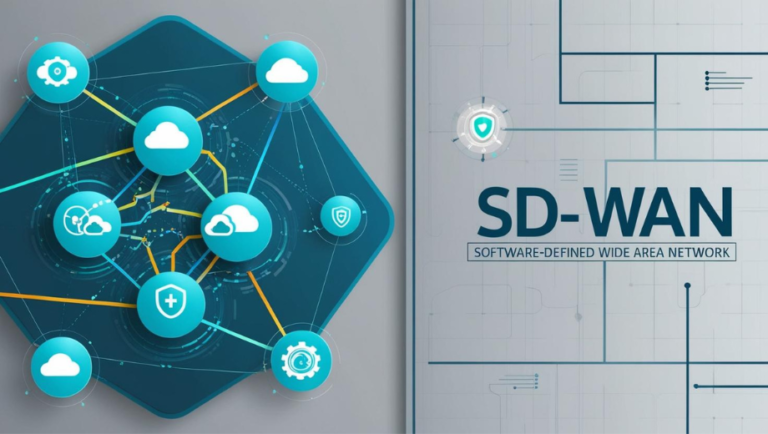
A Wide Area Network (WAN) spans larger geographical areas, often connecting multiple LANs across cities, countries, or even continents. The internet is the largest and most well-known example of a WAN. WANs are used by businesses to connect their remote offices and facilitate communication across vast distances.
c. Metropolitan Area Network (MAN)
A Metropolitan Area Network (MAN) is larger than a LAN but smaller than a WAN. MANs typically cover a city or a large campus. They are commonly used to connect multiple buildings within a specific region, such as linking university campuses or large office complexes.
d. Personal Area Network (PAN)
A Personal Area Network (PAN) is a small-scale network typically used to connect personal devices such as smartphones, laptops, or wearable devices within close proximity (usually within 10 meters). Technologies like Bluetooth and Wi-Fi are commonly used to create PANs.
SEO Keywords: LAN, WAN, MAN, PAN, network types, network connectivity.
3. Networking Protocols: The Language of Networks
For devices on a network to communicate effectively, they need a set of rules known as network protocols. These protocols define how data is transferred across the network and ensure that devices interpret the data correctly.
a. Transmission Control Protocol (TCP) / Internet Protocol (IP)
One of the most widely used networking protocols is TCP/IP. The Transmission Control Protocol (TCP) handles the reliable transmission of data, while the Internet Protocol (IP) is responsible for addressing and routing data packets to their destination. Together, these protocols ensure that data reaches the correct destination and that errors are corrected along the way.
b. Hypertext Transfer Protocol (HTTP)
The Hypertext Transfer Protocol (HTTP) is used to transfer data on the World Wide Web. HTTP defines how messages are formatted and transmitted, and how web servers and browsers should respond to various commands. For secure communication, the encrypted version HTTPS (HTTP Secure) is used.
c. Simple Mail Transfer Protocol (SMTP)
SMTP is the protocol used for sending emails across the internet. It ensures that email messages are delivered to the recipient’s mail server.
d. File Transfer Protocol (FTP)
FTP is used to transfer files between computers over a network. FTP enables both uploading and downloading files to and from servers, making it a vital tool for website management and cloud storage services.
SEO Keywords: networking protocols, TCP/IP, HTTP, SMTP, FTP, data transmission.
4. Network Devices and Components
A well-functioning network relies on various network devices and components. Each plays a unique role in ensuring smooth communication, data transfer, and connectivity.
a. Routers
A router is a device that forwards data packets between different networks. It is primarily used to connect a local network (such as a home or office network) to the internet. Routers are responsible for determining the best path for data packets to travel and ensure they reach their destination efficiently.
b. Switches
A switch connects devices within a LAN. Unlike a hub, which sends data to all connected devices, a switch sends data only to the device it’s intended for, improving efficiency and reducing network congestion.
c. Modems
A modem (short for modulator-demodulator) converts digital data from a computer into analog signals that can travel over phone lines or cable systems. Modems also convert incoming analog signals into digital data for the computer.
d. Firewalls
A firewall is a network security device that monitors and controls incoming and outgoing network traffic. It acts as a barrier between a trusted internal network and untrusted external networks, like the internet, to prevent unauthorized access and attacks.
SEO Keywords: networking devices, routers, switches, modems, firewalls, network security.
5. The Future of Networking: 5G and Beyond
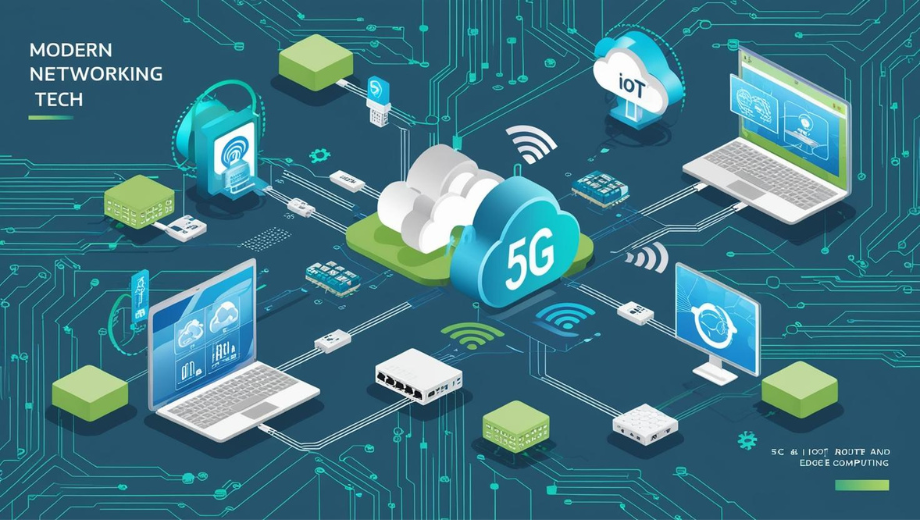
As the world becomes more reliant on connectivity, the future of networking is set to be shaped by 5G and emerging technologies. 5G, the next generation of mobile network technology, promises to deliver faster speeds, lower latency, and improved reliability compared to current 4G networks.
Key Features of 5G Networks:
- Increased Speed and Capacity: 5G networks offer download speeds up to 100 times faster than 4G, making it ideal for high-bandwidth applications like streaming, gaming, and virtual reality.
- Low Latency: 5G promises ultra-low latency, enabling near-instantaneous communication between devices, which is crucial for applications such as autonomous vehicles and industrial automation.
- Internet of Things (IoT): 5G will enhance the IoT ecosystem by connecting billions of devices, allowing for smarter cities, homes, and industries.
Beyond 5G, we can expect the continued growth of Wi-Fi 6, Wi-Fi 7, and edge computing, which will further expand the capabilities of networking and make data transfer more efficient and accessible.
Conclusion
Networking is the foundation upon which the modern digital world operates. From home networks to global communication systems, networks enable everything we do online. With new advancements in networking technologies, such as 5G, Wi-Fi 6, and edge computing, the potential for growth and innovation in connectivity is limitless. Understanding networking fundamentals and staying ahead of emerging trends will empower individuals and businesses to harness the full potential of the interconnected world.