Table of Contents
In today’s hyper-connected world, where the volume of data generated continues to grow exponentially, traditional centralized data processing models are struggling to keep up. Enter Edge Computing—a paradigm that brings computation and data storage closer to the location where it’s needed, such as on IoT devices, sensors, or local servers. By decentralizing data processing, edge computing reduces latency, improves speed, and ensures more efficient use of resources. In this blog, we will dive into what edge computing is, its benefits, real-world use cases, and how it’s transforming industries worldwide.
1. What is Edge Computing?
Edge computing is a distributed computing framework that processes data at or near the source of data generation, such as IoT devices, sensors, and other endpoints, rather than relying solely on a centralized cloud or data center. This decentralized approach ensures faster data processing and response times, which is critical in environments where real-time decisions are necessary.
Key characteristics of edge computing include:
- Proximity to Data Sources: Edge computing moves computing closer to where the data is generated, such as within factories, vehicles, or even smart homes.
- Real-Time Processing: It facilitates real-time data analysis, providing quicker insights and responses.
- Reduced Latency: By minimizing the need for data to travel back and forth to central servers, edge computing helps significantly reduce latency.
- Autonomous Operations: In some cases, edge devices can function autonomously without needing constant communication with a central server, making them reliable even in remote or disconnected environments.
SEO Keywords: Edge computing, real-time data processing, decentralized computing, IoT edge devices.
2. Benefits of Edge Computing
Edge computing offers several advantages over traditional cloud computing, particularly in environments where speed, security, and efficiency are paramount. Here are the core benefits of edge computing:
a. Reduced Latency
One of the primary benefits of edge computing is the reduction of latency. When data is processed locally, there is no need for it to travel long distances to centralized data centers. This significantly reduces the delay in processing and ensures faster response times, which is crucial for applications that require real-time decision-making, such as autonomous vehicles or remote healthcare.
b. Bandwidth Efficiency
Edge computing optimizes bandwidth usage by processing data locally and only sending relevant information back to the cloud or central servers. This reduces the strain on network resources, preventing bandwidth congestion and lowering operational costs.
c. Enhanced Data Privacy and Security
Because edge computing processes sensitive data on-site, it reduces the risk of data breaches during transmission to central servers. This localized processing also enables more granular control over data security and privacy, as businesses can implement stricter security measures at the edge.
d. Cost Efficiency
Edge computing can help businesses save on cloud infrastructure and bandwidth costs by offloading computation to local devices. This can be particularly beneficial for organizations that handle vast amounts of data or operate in remote locations where reliable cloud connections are limited.
e. Scalability
Edge computing supports the scaling of operations, especially in industries such as manufacturing or logistics, where large networks of devices and sensors need to be deployed. By decentralizing the processing power, businesses can scale quickly and efficiently without overwhelming centralized infrastructure.
SEO Keywords: Benefits of edge computing, reduced latency, edge computing security, scalable edge solutions.
3. Key Applications and Use Cases of Edge Computing
Edge computing is rapidly becoming a key enabler across various industries, providing solutions that can improve efficiency, safety, and performance. Below are some of the most impactful use cases of edge computing:
a. IoT and Smart Devices
The Internet of Things (IoT) ecosystem thrives on edge computing. IoT devices, such as smart thermostats, wearables, and connected vehicles, generate large amounts of data that require fast processing to enable real-time decisions. With edge computing, these devices can process data locally, ensuring immediate responses without waiting for cloud processing.
b. Autonomous Vehicles
Autonomous vehicles rely heavily on real-time data from sensors like cameras, LiDAR, and radar to navigate and make decisions. Edge computing enables immediate processing of data from these sensors, allowing vehicles to react quickly to changes in their environment, improving safety and efficiency.
c. Healthcare and Remote Monitoring
In the healthcare sector, edge computing allows for real-time data processing in medical devices, wearables, and remote monitoring systems. By analyzing patient data locally, healthcare providers can make faster decisions, improving patient care while reducing latency in critical situations, such as remote surgeries or diagnostics.
d. Industrial Automation and Smart Manufacturing
In smart factories, edge computing is used to monitor and analyze data from machinery, sensors, and production lines in real time. This enables predictive maintenance, reduces downtime, and optimizes production processes. Edge computing also helps factories operate more efficiently by processing large amounts of data without sending everything to a central cloud, reducing congestion and costs.
e. Smart Cities
Edge computing plays a pivotal role in smart city infrastructure. From traffic monitoring and waste management to environmental sensors and smart lighting, edge devices enable local data processing to optimize city operations in real-time. This allows cities to react to issues quickly and improve the quality of life for their residents.
SEO Keywords: Edge computing use cases, IoT edge, autonomous vehicles, healthcare edge computing, smart manufacturing.
4. How Edge Computing Works with Cloud Computing
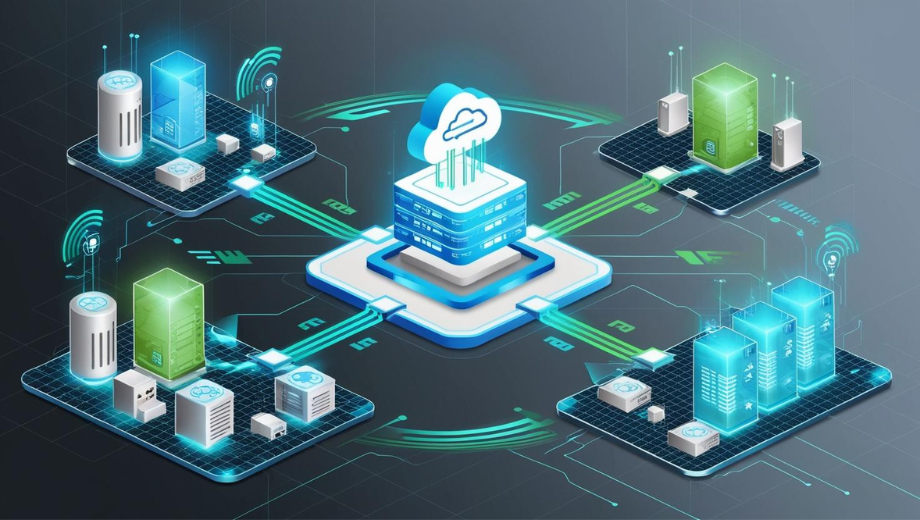
While edge computing and cloud computing are distinct technologies, they work best when integrated. The cloud provides centralized storage, large-scale processing, and long-term analytics, while edge computing complements this by handling real-time processing and reducing the burden on the cloud.
The combination of edge and cloud computing creates a hybrid architecture that is both efficient and scalable. Edge devices perform immediate processing and decision-making, while the cloud stores and processes large datasets for long-term analysis. This synergy allows businesses to get the best of both worlds—real-time capabilities at the edge and deep analytics in the cloud.
SEO Keywords: Edge computing cloud integration, hybrid cloud architecture, cloud and edge synergy.
5. The Future of Edge Computing: Trends to Watch
Edge computing is still in its early stages but is expected to evolve rapidly in the coming years. Here are some trends to watch:
a. 5G Integration
The rollout of 5G networks will significantly enhance edge computing capabilities by providing faster and more reliable wireless communication. This will support new applications, such as real-time streaming, augmented reality (AR), and virtual reality (VR), which require low latency and high data throughput.
b. AI and Machine Learning at the Edge
Artificial intelligence (AI) and machine learning (ML) will be increasingly deployed at the edge to enable intelligent decision-making and automation. By processing AI models locally, businesses can improve efficiency, reduce latency, and enhance the performance of edge devices.
c. Increased Focus on Edge Security
As more devices become interconnected at the edge, securing these endpoints will become increasingly important. Expect to see a rise in edge-specific security solutions, including device authentication, encryption, and intrusion detection systems, to protect the vast number of distributed devices and networks.
SEO Keywords: Future of edge computing, edge computing trends, 5G edge computing, AI at the edge, edge computing security.
Conclusion
Edge computing is reshaping how organizations process and interact with data. By decentralizing data processing, it reduces latency, improves bandwidth efficiency, and provides real-time insights across a wide array of industries. From smart cities and autonomous vehicles to healthcare and industrial automation, edge computing is driving the digital transformation of the modern world. As the technology continues to evolve, edge computing will play a pivotal role in enabling more efficient, scalable, and secure applications.